
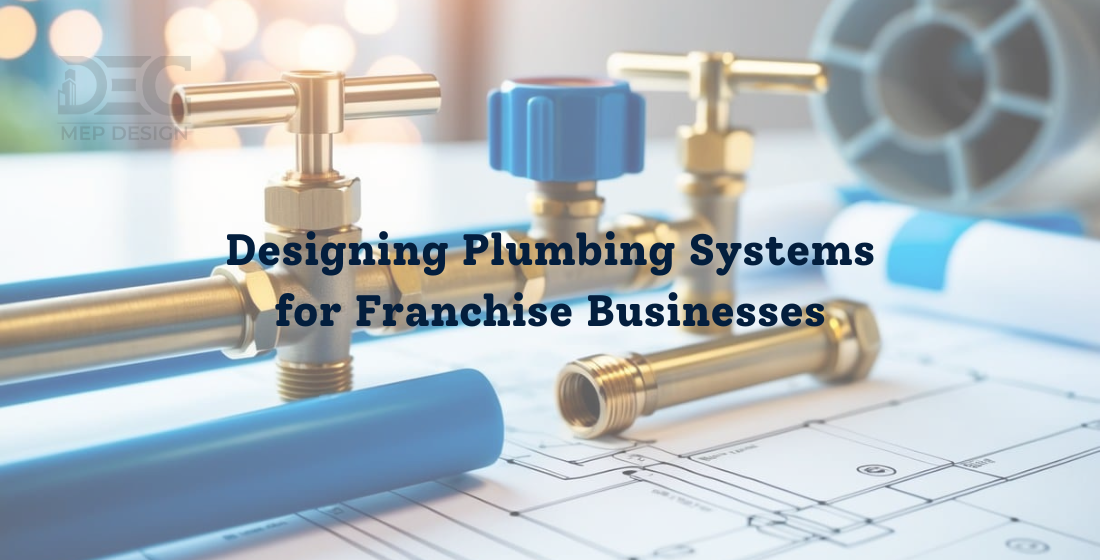
In franchise businesses, where uniformity and operational efficiency are paramount, it is important to design an effective plumbing system. The plumbing design for a franchise is the spinal cord of any commercial establishment, especially in industries such as food service, hospitality, or retail, where water supply, waste management, and hygiene are major components. For the franchise operations, the challenge lies in creating standardized plumbing systems that meet local rules, ensuring frequent functionality in many places.
This blog dives into the unique considerations and best practices for designing plumbing systems tailored to franchise businesses.
1. Understanding Franchise Requirements
The franchisees work on a model of business replication, where the image and operation of the brand should remain consistent in all places. Plumbing systems play an important role in ensuring uniformity:
- Functionality: A Restaurant requires accurate plumbing for dishwashing, toilets, and cooking tools. Similarly, laundromats require frequent water pressure and temperature.
- Design Aesthetics: exposed plumbing or stability placements often require alignment with the interior design guidelines of the franchise.
- Compliance: Each franchise location should follow local building codes and health rules without distracting from the standards of the brand.
2. Standardization vs. Localization
While standardization is necessary to maintain the brand identity, the plumbing system should also be adapted to local conditions. Major ideas include:
- Water Quality: local water quality variations, such as rigid or soft water, may require to inclusion of water treatment systems or additional filtration.
- Regulatory Differences: The piping code can vary greatly by the area, affecting pipe materials, stability types, and drainage solutions.
- Climate Adaptations: In cold climates, places may require untouched pipes to prevent freezing, while warm areas may require cooling mechanisms to maintain water temperature.
3. Efficiency and Sustainability
Modern franchises prioritize rapid stability. A well-designed plumbing system can help reduce water consumption and lower utility costs. Strategies include:
- Low-flow fixtures: installing low-flow taps, toilets, and showerheads can significantly reduce water use.
- Smart Monitoring Systems: IoT-competent sensor can detect leaks, monitor the use of water, and optimize the maintenance program.
- Rainwater Harvesting and Greywater Systems: These can be applied to reduce dependence on municipal water supply and promote environmentally friendly operations.
- Energy-Efficient Water Heaters: Tankless or solar-operated water heaters can be an excellent investment for franchisees with high hot water demand.
4. Scalability for Future Growth
Franchise businesses often expand rapidly, requiring a plumbing system to adjust to the growth. Scalability involved:
- Modular Designs: The plumbing system should be designed for easy expansion or adaptation. For example, a multi-unit restaurant may require additional kitchen sinks or grease traps as it grows.
- Centralized Plans: By having a standardized plumbing blueprint that can be repeated with minor adjustments, it simplifies expansion in new locations.
- Flexible Materials: Durables like PEX piping, yet ensure flexible materials that the system can handle increased loads or future retrofits.
5. Specialized Needs of Franchise Types
Different types of franchises have unique plumbing requirements. For instance:
- Restaurants: Require grease interceptors, high-capacity water heaters, and drainage systems capable of handling food waste.
- Laundromats: Need robust systems with high water pressure, temperature control, and efficient wastewater management.
- Salons and Spas: Depend on plumbing systems that deliver consistent water pressure and temperature for customer comfort.
- Retail Stores: May need simpler systems but still require well-placed fixtures for employee and customer use.
6. Maintenance and Long-Term Durability
Maintenance is critical for any plumbing system, especially in high-traffic franchise businesses. Considerations include:
- Accessible Design: Plumbing systems should be designed for easy access to pipes, valves, and fixtures to minimize downtime during repairs.
- Durable Materials: Investing in high-quality materials reduces wear and tear, ensuring longevity.
- Preventive Maintenance Plans: Regular inspections and servicing can prevent costly breakdowns and maintain operational consistency.
7. Partnering with Experts
Franchise plumbing projects often involve a team of professionals, including architects, engineers, and plumbing contractors. Collaborating with experts ensures:
- Accurate Designs: Professionals can create systems that meet franchise standards and local codes.
- Timely Execution: Experienced contractors can complete installations efficiently, reducing delays in opening new locations.
- Cost-Effective Solutions: Experts can help identify cost-saving opportunities without compromising the insight quality.
Conclusion
Designing plumbing systems for franchise businesses is a complex but necessary task that requires balanced uniformity, efficiency, and adaptability. By focusing on standardization, stability, and scalability, franchises can ensure that their plumbing systems support spontaneous operation and development. Partnership with skilled professionals and a preference for quality materials and new solutions can create all the differences, providing a strong foundation for the success of the franchise. For franchise owners and developers, investing in a well-designed plumbing system is not only about meeting immediate operating requirements but also about building a permanent and scalable future.
Designing an efficient plumbing system is just one piece of the puzzle in franchise development. To ensure seamless operations, it’s essential to integrate comprehensive MEP solutions. Get learn more about franchise business
How-To Guide: Implementing an Efficient Plumbing System for Your Franchise
A well-designed plumbing system is essential for maintaining seamless operations in any franchise business. Follow these steps to ensure your plumbing setup meets operational, regulatory, and sustainability requirements.
- Conduct a Site Assessment
Evaluate the location’s water quality, pressure, and existing infrastructure.
Check local plumbing codes and regulations to ensure compliance.
Identify specific needs based on the franchise type (e.g., restaurant, laundromat, salon). - Develop a Standardized Plumbing Blueprint
Work with engineers to create a scalable plumbing design that can be replicated across locations.
Ensure uniform fixture placements, pipe routing, and drainage solutions.
Incorporate brand-specific design elements while adhering to local codes. - Select the Right Plumbing Materials and Equipment
Use durable, flexible materials like PEX or copper for longevity.
Install energy-efficient water heaters, low-flow fixtures, and smart monitoring systems.
Choose appropriate drainage systems, grease traps (for food businesses), and backflow preventers. - Ensure Water Efficiency and Sustainability
Implement water-saving technologies, such as motion-sensor faucets and dual-flush toilets.
Integrate rainwater harvesting and greywater recycling where feasible.
Regularly monitor water usage to detect and address leaks early. - Plan for Scalability and Maintenance
Design systems that allow for easy expansion and modifications.
Ensure plumbing is accessible for maintenance and repairs.
Establish a preventive maintenance schedule to minimize disruptions.
FAQ: Common Questions About Franchise Plumbing Systems
Standardized plumbing ensures consistency across multiple locations, simplifies maintenance, reduces installation costs, and helps maintain brand identity while complying with local regulations.
Work with licensed plumbing professionals who understand local codes. Obtain necessary permits and inspections before installation to avoid costly modifications later.
Low-flow faucets, water-efficient dishwashers, smart leak detection sensors, and greywater recycling systems can help reduce water usage without affecting operations.
Regular maintenance, high-quality materials, and preventive inspections help reduce breakdowns. Installing backup systems, such as water pressure regulators, also ensures uninterrupted service.
Use scalable designs, flexible piping, and smart monitoring technology. Design layouts that allow for easy modifications and expansion as your franchise grows.
Work with experienced plumbing contractors, buy materials in bulk, use modular system designs, and invest in durable equipment that minimizes long-term maintenance expenses.
If your franchise operates in an area with hard or poor-quality water, installing filtration or softening systems can extend the life of your plumbing and improve water quality for operations.


No comment